




Top Universities in Boston 2027
Boston University ranks #1 among universities in Boston in the UNIRANKS 2027 ranking snapshot, followed by Northeastern University at #2 and the University of Massachusetts Boston at #3. Boston features a total of 20 ranked universities, with the top 10 presented here, illustrating the city's robust academic landscape and diverse educational opportunities for students.

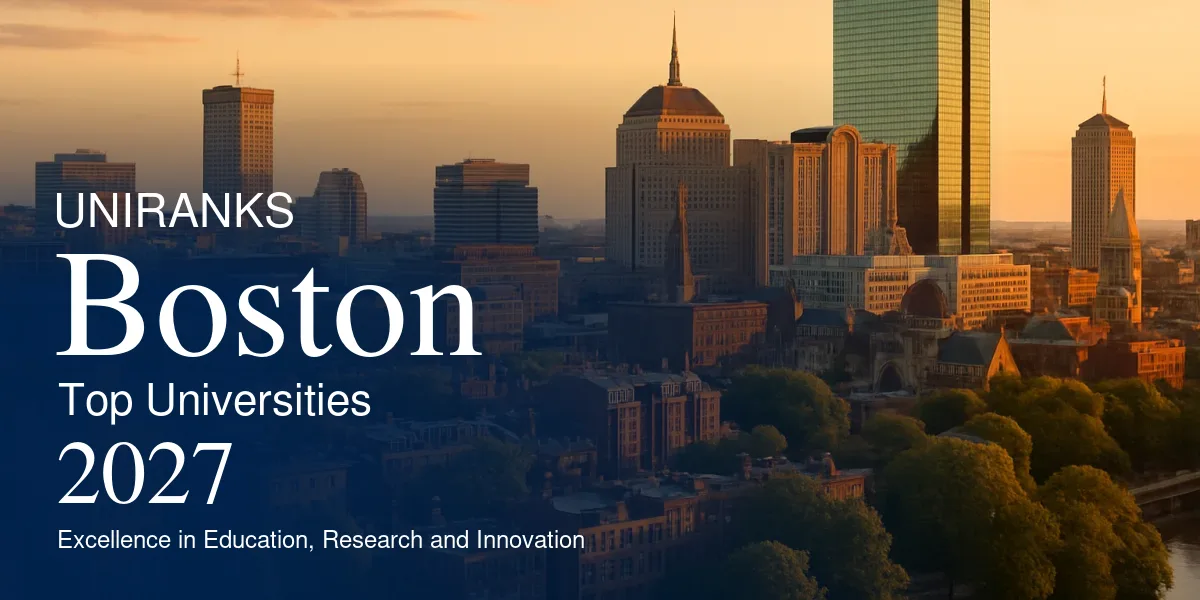
Key Takeaways
- Boston University leads the Boston table at city rank #1.
- Higher-education students: 250,000 students.
- Stored monthly student living cost: USD 1,200.
- Metro or urban rail available: Yes.
Introduction
Boston stands out as a globally recognized hub of higher education within the United States, known for its dense concentration of top-tier universities and cutting-edge research centers. As an emblem of academic excellence, Boston attracts students from across the country and around the world, seeking a rich educational experience supported by diverse institutional offerings. This article delves into the UNIRANKS 2027 city university rankings for Boston, presenting the leading universities based on their global standings and academic prestige. With 20 universities in Boston included in the UNIRANKS dataset, readers are provided a detailed overview of the city’s academic fabric, the competitive positions of its institutions, and insight into the student lifestyle and costs associated with studying there. Beyond ranking data, the article explores Boston’s livability factors such as weather, public infrastructure, and community culture, all of which contribute to enhancing the student experience. This comprehensive narrative is designed to equip prospective students, educators, and stakeholders with a thorough understanding of what studying in Boston entails in 2027, highlighting the city’s compelling blend of tradition, innovation, and global connectivity.
Top Universities in Boston, United States of America for 2027
| Rank | University | Country | World Rank | Overall Score |
|---|---|---|---|---|
| 1 |
 United States of America |
37 | 95.5 | |
| 2 |
United States of America
|
165 | 92.1 | |
| 3 |
United States of America
|
679 | 84.8 | |
| 4 |
United States of America
|
1660 | 72.7 | |
| 5 |
United States of America
|
1837 | 71.6 | |
| 6 |
United States of America
|
2119 | 68.7 | |
| 7 |
United States of America
|
2242 | 67.7 | |
| 8 |
United States of America
|
2268 | 67.5 | |
| 9 |
United States of America
|
3631 | 56.0 | |
| 10 |
United States of America
|
3826 | 54.3 |


Boston at a Glance
How Extensive Is Boston's Higher-Education Landscape?
Boston’s higher education ecosystem is remarkable for the variety and depth of offerings it provides, representing an extensive cross-section of disciplines, institutional types, and academic models. The city hosts 20 universities featured in the UNIRANKS 2027 ranking, underscoring its prominence as a major educational center within the United States. This diversity spans prestigious research universities like Boston University, which ranks 37th globally with a total score of 95.48, to specialized institutions such as Berklee College of Music, renowned for its excellence in contemporary music education. Northeastern University, ranking 165th globally, brings a strong focus on experiential learning by embedding co-op programs that integrate classroom theory with real-world professional experience. The academic offerings stretch across the liberal arts, sciences, technology, health sciences, business, and performing arts, ensuring a broad appeal to diverse student interests. Boston’s educational landscape benefits greatly from inter-institutional collaborations, which foster cross-disciplinary research and joint academic programs, enhancing both innovation and educational quality. Additionally, the presence of numerous branch campuses, research institutes, and dedicated centers facilitates specialized fields of study and advanced research projects. This rich academic tapestry not only attracts a wide student demographic but also strengthens Boston’s reputation as a nurturing environment for intellectual growth and professional readiness.
What Are Key Trends in Boston's Academic Environment?
Boston’s academic scene is closely intertwined with dynamic industry trends, creating a fertile ground for innovation and applied learning. A defining characteristic is the city’s strong emphasis on research and innovation, backed by robust public and private investment. Universities in Boston actively engage in pioneering scientific research across fields such as biotechnology, information technology, and healthcare, areas in which Boston’s economy is particularly vibrant. Moreover, the internationalization of education is highly prominent, with over 21% of Boston’s higher education population consisting of international students — approximately 54,000 individuals — enhancing the city’s cultural richness and global outlook. Graduate employability is strategically prioritized, as demonstrated by institutions' commitment to integrating practical learning, internships, and cooperative education within academic programs. Ties with local industries enable students to access career pathways that align with evolving market demands, especially in fast-growing sectors. Technological advancement is another crucial trend, with universities upgrading digital infrastructure to support hybrid learning and improve student services — a reflection of a broader shift toward flexible, tech-enabled education. Furthermore, sustainability initiatives are increasingly incorporated into academic curricula and campus operations, showcasing the city’s commitment to environmental stewardship and social responsibility. Collectively, these trends illustrate how Boston’s universities adapt to global challenges while maintaining strong community and industry linkages, thereby creating well-rounded graduates equipped for future success.
What Should Students Consider When Choosing a University in Boston?
Selecting a university in Boston requires students to consider multiple factors that extend beyond the universities’ global rankings. Academic offerings are foundational; students should seek programs that align not only with their passions but also with pragmatic career objectives, given Boston’s wide array of specialized as well as comprehensive institutions. Financial aspects are equally significant, as Boston’s average monthly student living cost hovers around USD 1,200, with accommodation expenses averaging USD 900 per month, making housing the most substantial component. Prospective students must assess their budgets carefully, considering additional costs such as food, transportation, and personal expenses. The city’s climate merits consideration as well; Boston experiences cold winter months averaging 0°C with potential snowfall, which requires preparation, while summer temperatures average a pleasant 23°C, conducive to outdoor activities and campus events. Transportation infrastructure adds a practical dimension to university choice. Boston boasts an extensive public transit system operated by the Massachusetts Bay Transportation Authority (MBTA), including metro, bus, and commuter rail services. With approximately 65 urban rail stations and affordable monthly passes costing around USD 90, students enjoy connectivity across neighborhoods and campuses, facilitating academic and social engagement. Additionally, the varied character of Boston’s neighborhoods — from the historic Back Bay to the youthful vibrancy of Allston and Fenway — influence student lifestyle and community involvement. International students face unique considerations, including visa policies, support services, and opportunities for cultural integration provided by universities and local organizations. Additionally, evaluating a university's connections with industry partners is crucial for securing internships and cooperative education experiences, which are critical stepping stones toward employment. Ultimately, prospective students should adopt an informed, holistic approach when selecting a Boston institution, aligning personal goals, academic strengths, and practical living factors to ensure an optimal educational journey.
Cost of Studying in Boston
Student Life & Infrastructure
Climate, Work & Quality of Life
Cost, Student Life, Infrastructure, Climate & Career Analysis
Engaging in higher education in Boston entails immersing oneself in a comprehensive academic environment coupled with an active urban lifestyle. Financial planning is paramount since, based on 2022 data, students incur average monthly expenses of USD 1,200, of which about USD 900 is dedicated to accommodation. This cost framework requires attention to budgeting, given the city’s comparatively high living expenses. Complementing this financial dimension is Boston’s well-developed public transport system, managed by the MBTA. The network features metro, bus, and commuter rail services, with the metro alone comprising around 65 stations strategically positioned across urban sectors. For a monthly fee of approximately USD 90, students can access efficient and reliable transit throughout the city, enhancing mobility between home, campus, and leisure destinations. Boston’s climate diversity introduces seasonal rhythms to student life; summers offer agreeable warmth with average temperatures around 23°C, promoting outdoor gatherings, sports, and events, whereas winters present colder conditions with potential snowfall requiring appropriate attire and housing arrangements. The city’s compact geography, together with its extensive transit options, mitigates commuting challenges, allowing students to balance academic responsibilities and social activities effectively. Boston also benefits from a vibrant multicultural population, with over 21% of its higher education students being international, which cultivates an inclusive, diverse campus culture. Neighborhoods such as Allston, Fenway, and the Back Bay are especially popular with students due to their proximity to universities, diverse dining and entertainment options, and sociable atmospheres. Additionally, Boston’s international airports bolster global connectivity, facilitating travel for international students and visitors. Overall, studying in Boston involves engaging with a dynamic blend of academic rigor, cultural richness, and urban convenience, creating a well-rounded experience that supports both personal and scholarly growth.
Why Study in Boston?
Choosing Boston as a study destination offers students an exceptional convergence of academic distinction, cultural diversity, and career opportunities. The city’s universities rank among the best globally and cater to a broad spectrum of disciplines, from the arts and humanities to cutting-edge science and technology fields, allowing students to tailor their academic paths to individual aspirations. Boston’s climate provides a distinct seasonal experience, with warm, inviting summers averaging 23°C that encourage outdoor activities, and colder winters averaging 0°C that require adjustment but also bring vibrant seasonal events and university traditions. The city’s extensive and well-integrated public transportation network ensures that students can navigate efficiently between their homes, campuses, and the wider city, fostering autonomy and easy access to cultural and professional resources. An important aspect contributing to Boston's appeal is its multicultural environment, reinforced by a significant international student population exceeding 21%, which enriches social and intellectual life and prepares students for global citizenship. Additionally, Boston’s established connections with key industries, particularly in biotechnology, healthcare, and information technology, provide invaluable internship and job placement opportunities, forging pathways from classroom to career. While living expenses are higher relative to many other cities, Boston offsets this with comprehensive student support services, diverse housing options, and a high safety score of 67.5, contributing to a secure and supportive environment. These combined factors make Boston an attractive, vibrant, and strategically positioned city to pursue higher education in 2027, offering both academic enrichment and meaningful life experiences.
Methodology
University Ranking Data
The university positions, scores and country-ranking data shown in this article come directly from the UNIRANKS 2027 ranking datasets and are not recalculated or modified by the article-generation process.
City Context Data
The city cards use 17 available stored metrics from city-data edition 2. These values provide context and do not determine or alter any university ranking position or score.
Frequently Asked Questions
How many higher-education students are in Boston?
How many international students are there?
What does it cost a student to live there?
How much is accommodation?
Is Boston safe for students?
Does the city have metro or urban rail?
What is healthcare like?
What is the climate?
What are the best universities in Boston?
Is Boston good for international students?
Conclusion
The UNIRANKS 2027 city university rankings reaffirm Boston’s status as a distinguished academic center, showcasing 20 recognized universities with Boston University prominently leading in global standing. The city’s multifaceted higher education environment encompasses a broad range of institutions serving diverse academic disciplines and accommodating substantial international student representation. Prospective students should thoughtfully evaluate factors such as financial costs of living, seasonal climate variations, and the advantages afforded by Boston’s extensive public transportation network when making university selections. Beyond rankings, Boston’s balance of an esteemed educational ecosystem and a lively, culturally rich urban setting positions it as an exceptional destination for scholarly pursuit and personal growth. In 2027, students choosing Boston will find themselves in a supportive environment that blends tradition and innovation, facilitating academic excellence and vibrant community engagement.
 German
 English
 Spanish
 French
 Portuguese
 Turkish
 Russian
 Arabic
 Hindi
 Chinese
 Korean
Comments (0)
Join the discussion
Comments must be relevant to this article and cannot contain links.
Unrelated comments or comments containing links will not be published.