




Top Universities in Mexico City 2027
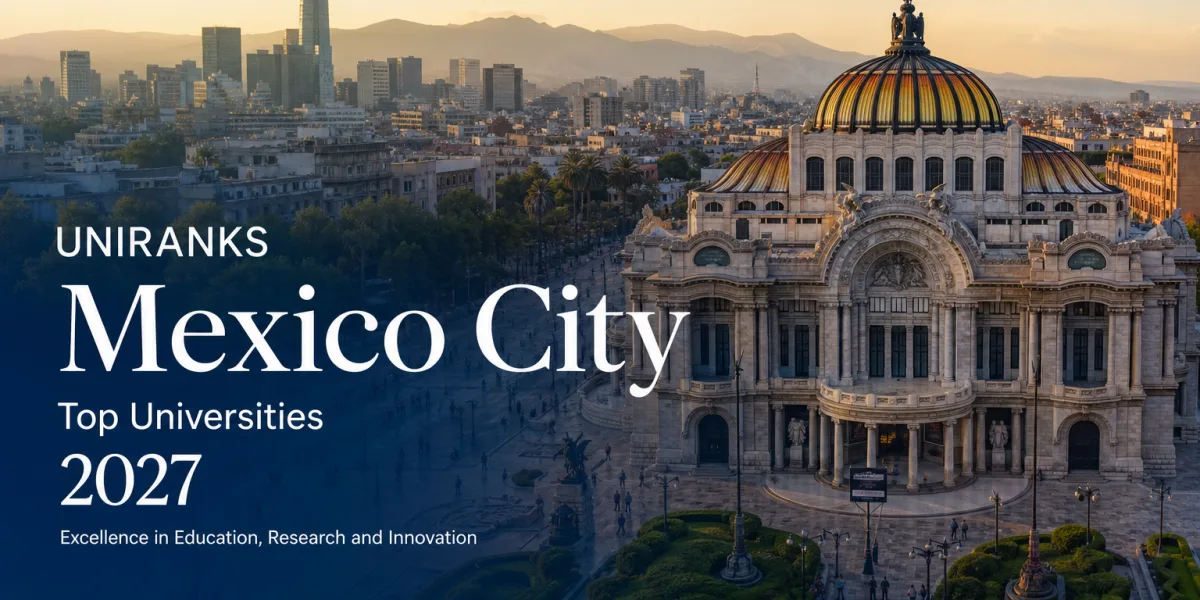
National Autonomous University of Mexico ranks #1 among universities in Mexico City in the UNIRANKS 2027 ranking snapshot, followed by National Polytechnic Institute at #2 and Metropolitan Autonomous University at #3. Mexico City has 199 ranked universities in the UNIRANKS 2027 dataset, with the leading 10 shown below. This article highlights the top universities in Mexico City 2027 and essential student information about studying in this vibrant capital.

Key Takeaways
- National Autonomous University of Mexico leads the Mexico City table at city rank #1.
- Higher-education students: 1,600,000 students.
- Stored monthly student living cost: USD 350.
- Metro or urban rail available: Yes.
Introduction
Mexico City is one of the largest university hubs in Latin America, hosting a multitude of higher education institutions that serve a diverse and growing student population. This article provides an overview of the top universities in Mexico City according to the UNIRANKS 2027 ranking snapshot. Readers will find a detailed list of the leading 10 ranked universities within the city, which is home to a total of 199 ranked institutions. Additionally, this article explores the higher-education environment, student lifestyle factors such as cost of living and transportation, climate, and infrastructure, aiming to inform prospective students about academic opportunities and living conditions in Mexico City. This balanced view supports a comprehensive understanding of what studying in Mexico City in 2027 entails beyond just university rankings, focusing on student-relevant contextual information and city-specific characteristics crucial for decision-making in higher education planning and selection in this vibrant metropolitan area with strong national and international connections and a large academic community supporting research and innovation.
Top Universities in Mexico City, Mexico for 2027
| Rank | University | Country | World Rank | Overall Score |
|---|---|---|---|---|
| 1 |
 Mexico |
225 | 91.1 | |
| 2 |
Mexico
|
559 | 87.0 | |
| 3 |
Mexico
|
857 | 81.7 | |
| 4 |
Mexico
|
1390 | 74.6 | |
| 5 |
Mexico
|
1682 | 72.5 | |
| 6 |
Mexico
|
1813 | 71.7 | |
| 7 |
Mexico
|
2014 | 69.6 | |
| 8 |
Mexico
|
2611 | 64.1 | |
| 9 |
Mexico
|
3093 | 60.5 | |
| 10 |
Mexico
|
3167 | 60.0 |





Mexico City at a Glance
How Extensive Is Mexico City's Higher-Education Landscape?
Mexico City presents a robust and varied higher-education landscape characterized by an array of both public and private institutions. The public sector includes heavily represented state universities like the National Autonomous University of Mexico (UNAM) and the National Polytechnic Institute (IPN), which provide large-scale access to academic programs across numerous disciplines. Private institutions, such as Panamerican University Mexico and Ibeoamerican University, contribute diversity to the student body and academic offerings. The city's universities are complemented by specialized research centers like CINVESTAV, promoting advanced scientific and technological inquiry. The combined presence of these institutions makes Mexico City a pivotal educational center with significant student numbers, including a minority of international students, estimated at around 1.56%. Academic collaboration initiatives and university-industry partnerships are evident, with various efforts to enhance research output and innovation. This dynamic ecosystem supports a wide range of educational paths and research activities, fostering an environment conducive to both professional and academic growth for students locally and internationally, albeit with varying institutional strengths and reputations visible in the UNIRANKS rankings among the city's top universities in 2027 scenarios. Understanding the scale and diversity of Mexico City's educational landscape is crucial for prospective students seeking suitable academic environments and opportunities for interdisciplinary learning and research engagement within a vibrant metropolitan context that integrates education with industrial and cultural sectors effectively, maintaining its role as an educational nexus for Mexico and Latin America at large today and into the future years of study.
What Are Key Trends in Mexico City's Academic Environment?
Several discernible trends shape the academic and student experiences within Mexico City’s university environment. Research and Innovation efforts are continually supported, particularly within institutions like UNAM and CINVESTAV, promoting a culture of scientific inquiry and advanced study. The city fosters International Student Environment growth, albeit modest, through scholarship programs and international collaboration that gradually raise the number of foreign students. University-Industry Connections manifest in practical applications of research and program development tailored to Mexico City’s economic sectors, offering students pathways into employment and innovation-driven projects. Digital Campus Development is an increasing focus as universities adopt new educational technologies and online platforms, enhancing learning flexibility and digital literacy among students. These trends collectively influence academic priorities and student life, which are further shaped by the city’s infrastructure, cultural richness, and economic conditions. Understanding these trends allows students to align their choices with institutions that reflect their academic interests and career aspirations while benefiting from evolving educational landscapes and facilities designed to improve the overall university experience in Mexico City in 2027 and beyond, responding to global and local educational dynamics effectively within one of the world’s largest metropolitan educational hubs today and tomorrow’s emerging knowledge economies in Latin America’s urban capitals with strong academic presence and collaborative potentials worth considering by prospective students and academics alike for their study placements and research initiatives across academic disciplines and professional development areas relevant to Mexico’s socio-economic context.
What Should Students Consider When Choosing a University in Mexico City?
When selecting a university in Mexico City, prospective students should consider multiple factors beyond rankings alone to ensure their academic and personal goals are met. Given the city hosts a broad spectrum of institutions, differences in program offerings, research facilities, campus culture, and degree specializations warrant careful review. Students should assess institutional profiles such as size, public or private status, and focus areas to find those matching their academic interests and career plans. The urban context also means accessibility and proximity to public transportation—which in Mexico City includes an extensive metro system with 195 stations—can significantly impact daily commuting and living convenience. Assessing accommodation options and local costs of living is essential, as these contribute heavily to overall student expenses. With a temperate climate featuring mild summers and cool winters, students also need to consider lifestyle and cultural integration opportunities both within university campuses and the extensive metropolitan environment. International students, although a smaller percentage, should verify support structures like language assistance and international offices. Additionally, evaluating the potential for internships, industry collaborations, and employability support services can influence post-study career success. Ultimately, a thorough comparison of academic quality, campus environment, cost, infrastructure, and student services forms a comprehensive base for university selection in Mexico City, helping students optimize their educational outcomes within one of Latin America's largest and most dynamic education cities in 2027, balancing academic aspirations with practical living considerations in an evolving urban academic ecosystem that supports a wide range of student profiles and ambitions.
Cost of Studying in Mexico City
Student Life & Infrastructure
Climate, Work & Quality of Life
Cost, Student Life, Infrastructure, Climate & Career Analysis
Studying in Mexico City offers students a blend of academic rigor and urban living rooted in a diverse and dynamic environment. Cost of living for students averages approximately $350 USD monthly, covering essentials such as accommodation, food, and transport. Accommodation costs typically represent the largest portion, averaging around $200 USD per month for student housing. The city’s extensive public transport system, centered on an expansive metro network with 195 stations, facilitates convenient and affordable commuting for students across various districts. Weather in Mexico City is generally temperate, with average annual temperatures near 18.5°C, mild summers (~22°C), and cool winters (~11°C), creating comfortable conditions for most of the academic year. Student life unfolds within a metropolitan context, with multiple university campuses interspersed among urban neighborhoods offering cultural, social, and recreational activities. The city accommodates around 1.6 million higher education students, including approximately 25,000 international students, reflecting a globally connected but locally rooted academic community. Mexico City's international accessibility is supported by major airports facilitating cross-border travel, essential for exchange and study abroad opportunities. Students benefit from the integration of education infrastructure with urban amenities, though navigating urban challenges such as traffic congestion and safety variances requires awareness. Overall, the city's combined academic ambitions and metropolitan resources yield a student environment balancing educational opportunity, affordability, infrastructural capacity, and cultural richness essential for contemporary university studies in a major Latin American capital in 2027 and beyond, inviting both domestic and international students to engage with its academic and urban offerings effectively and respectfully within their educational journeys and career preparations in Mexico City’s evolving landscape of higher learning and urban life experiences poised for growth and innovation in the years ahead in the region and internationally alike without compromising academic quality or student well-being measured by diverse parameters supporting student success.
Why Study in Mexico City?
Choosing to study in Mexico City offers numerous advantages stemming from the city’s status as a major regional academic hub with extensive educational resources. The presence of a large number of ranked universities ensures a wide variety of program choices across disciplines, catering to diverse interests and career aims. Mexico City provides a culturally rich and vibrant metropolis conducive to personal growth and social interaction, supporting students’ broader development beyond academics. The relatively moderate climate is another appealing factor, allowing students to focus on studies year-round without extreme weather concerns. Furthermore, the city’s comprehensive public transportation and accessible accommodation options create a practical environment for daily student life. While international students represent a smaller segment of the overall population, they benefit from internationalization efforts and local institutions striving to offer global perspectives. The cost of living, while varied, remains within reachable bounds for many pursuing higher education, especially when combined with the academic opportunities and urban amenities available. These factors collectively create a compelling proposition for students seeking to engage with a Latin American capital that balances tradition and modernity, fostering academic excellence together with social, cultural, and career development in 2027 and beyond. Ultimately, Mexico City offers a multifaceted student experience aligned with contemporary educational goals, situated within a diverse and evolving urban academic ecosystem.
Methodology
University Ranking Data
The university positions, scores and country-ranking data shown in this article come directly from the UNIRANKS 2027 ranking datasets and are not recalculated or modified by the article-generation process.
City Context Data
The city cards use 17 available stored metrics from city-data edition 2. These values provide context and do not determine or alter any university ranking position or score.
Frequently Asked Questions
How many higher-education students are in Mexico City?
How many international students are there?
What does it cost a student to live there?
How much is accommodation?
Is Mexico City safe for students?
Does the city have metro or urban rail?
What is healthcare like?
What is the climate?
What are the best universities in Mexico City?
Is Mexico City good for international students?
Conclusion
Mexico City stands out as a significant academic center with 199 ranked universities, supported by an extensive and diverse higher-education ecosystem. The National Autonomous University of Mexico leads the city's university rankings, reflecting a selection of reputable institutions available to students. Prospective students benefit from a temperate climate, a comprehensive public transport system, and a metropolitan environment rich in academic and cultural opportunities. However, assessing individual preferences related to costs, program fit, and lifestyle is essential when choosing among these top universities. Mexico City’s scale and infrastructure provide a conducive setting for higher education, offering varied pathways to academic and professional development in one of Latin America's largest urban education hubs in 2027.
 German
 English
 Spanish
 French
 Portuguese
 Turkish
 Russian
 Arabic
 Hindi
 Chinese
 Korean
Comments (0)
Join the discussion
Comments must be relevant to this article and cannot contain links.
Unrelated comments or comments containing links will not be published.