




Top Universities in Vancouver 2027
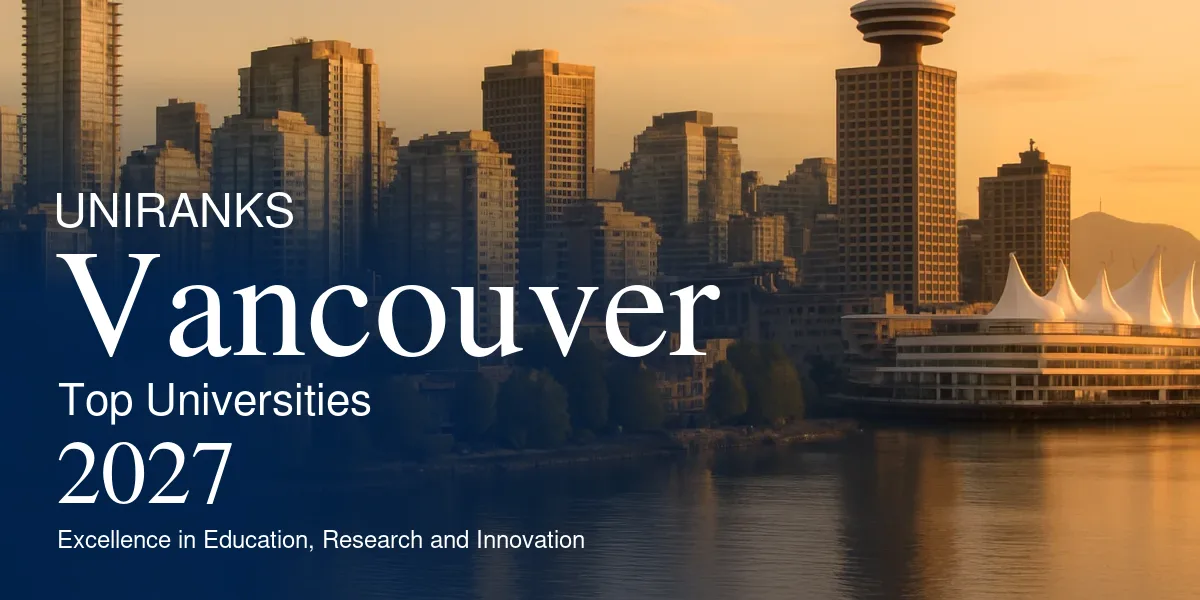
The University of British Columbia ranks #1 among universities in Vancouver in the UNIRANKS 2027 ranking snapshot, followed by Emily Carr University of Art + Design at #2 and University Canada West at #3. Vancouver has a total of 4 universities included in the UNIRANKS 2027 dataset, all of which are featured in this article on top universities in Vancouver 2027.

Key Takeaways
- University of British Columbia leads the Vancouver table at city rank #1.
- Higher-education students: 97,200 students.
- Stored monthly student living cost: CAD 1,200.
- Metro or urban rail available: Yes.
Introduction
Vancouver, Canada, is home to a dynamic higher-education environment with four universities ranked in the UNIRANKS 2027 snapshot. This article provides an overview of the top universities in Vancouver for 2027, focusing on their global positions and scores as recognized by UNIRANKS. By exploring the city’s university landscape, students and academics can gain insights into Vancouver’s academic offerings and research presence. Additionally, the article covers essential aspects like student living costs, climate, transportation, and the broader urban context to support informed decisions about studying in Vancouver. Understanding how universities rank within the city and what student life entails here is crucial for prospective applicants and educational professionals alike, ensuring alignment between academic choices and lifestyle preferences in a notable Canadian city known for its educational and cultural opportunities. This comprehensive view aims to aid readers in navigating Vancouver’s university rankings and what studying in this city entails in 2027, backed by current data and factual context pertinent to higher education and student life.
Top Universities in Vancouver, Canada for 2027
| Rank | University | Country | World Rank | Overall Score |
|---|---|---|---|---|
| 1 |
 Canada |
38 | 95.5 | |
| 2 |
Canada
|
4512 | 50.1 | |
| 3 |
Canada
|
5835 | 43.8 | |
| 4 |
Canada
|
10919 | 19.8 |



Vancouver at a Glance
How Extensive Is Vancouver's Higher-Education Landscape?
Vancouver’s university ecosystem is composed of institutions with distinct academic profiles and specializations. The University of British Columbia (UBC), holding the highest ranking position at 38 globally in the UNIRANKS 2027 snapshot, represents a major public research university with a multifaceted curriculum spanning sciences, humanities, and professional studies. The city also hosts Emily Carr University of Art + Design, known for its focus on visual arts, design, and media programs. Meanwhile, University Canada West and Acsenda School of Management contribute to Vancouver’s private higher-education sector, emphasizing business, management, and applied learning. These institutions collectively serve a student population that was recorded near 97,200 in 2021, with nearly 30% international students, reflecting Vancouver’s status as an attractive destination for global learners. The diversity of universities supports a broad academic offering, accommodating varied career trajectories and study interests, from intensive research to specialized arts and business education. This composition demonstrates that Vancouver’s higher-education landscape is both comprehensive in scope and accessible to a range of students, contributing to the city’s relevance as a study destination within Canada and internationally. Higher education in Vancouver also engages with local industries and cultural sectors, further enriching the academic environment and community integration without detailing ranking reasons for the institutions themselves. Student mobility and academic exchange are also noticeable aspects of the city’s educational fabric, supported by international student presence and partnerships with institutions worldwide. Overall, Vancouver’s university environment reflects a balance between research-intensive institutions and specialized teaching colleges, contributing to a vibrant higher-education atmosphere in 2027.
What Are Key Trends in Vancouver's Academic Environment?
Vancouver’s higher education is characterized by several prominent trends relevant to students and academics. First, research and innovation are vital aspects of the city’s academic institutions, especially at the University of British Columbia, which participates in a wide range of research initiatives and partnerships without explaining their influence on ranking outcomes. Second, the international student environment commands significant attention as nearly 30% of enrolled students come from outside Canada, contributing to a multicultural campus culture and diverse academic exchange. Third, student experience receives emphasis through Vancouver’s urban integration of campuses, which fosters active engagement with city amenities, cultural events, and social opportunities. Fourth, university-industry connections underline the city’s educational approach, with institutions collaborating on practical training, internships, and employment pathways, offering students exposure to Vancouver’s economic sectors without positing these as direct causes for ranking changes. These trends collectively shape the academic climate, making Vancouver a city that supports innovation, internationalization, and career orientation within its higher-education framework. Additional elements such as digital campus development and sustainability initiatives also feature in the city’s educational institutions, addressing modern student needs and global concerns without specifying their comparative weighting. Thus, Vancouver continuously evolves its higher-education ecosystem, reflecting contemporary priorities and practices conducive to a comprehensive student journey in 2027 and beyond, rooted in verified research and institutional focus areas aligned with student outcomes and academic collaboration strategies typical for a metropolitan Canadian city.
What Should Students Consider When Choosing a University in Vancouver?
When choosing a university in Vancouver, prospective students should consider several important factors beyond ranking positions. The city’s moderate population of approximately 662,248 people (2021) provides a compact but dynamic urban setting with access to cultural, recreational, and academic resources. Students should evaluate their preferred study areas given the diversity in academic specialization, ranging from research-focused to art and design or business management programs. Cost considerations are also critical; typical monthly living expenses for students average around 1,200 CAD, largely influenced by approximately 800 CAD in accommodation costs. Public transportation infrastructure includes a metro and urban rail network comprising 18 stations, facilitating ease of travel between campuses and throughout the city. Additionally, Vancouver’s climate features mild summers with an average of 17°C and winters around 4°C, conditions that create a temperate environment for year-round student engagement. Career prospects and networking opportunities can be influenced by university-industry connections and internship availability, elements intertwined with the city’s economic landscape. Accessibility for international students is supported through Vancouver International Airport and connections to global destinations, which should be an important consideration for overseas applicants. Finally, student safety is reflected by the city’s safety index score of 72.5 (2022), an essential metric when assessing study environments. These considerations, along with academic offerings and personal preferences, will help students make informed choices when selecting among the ranked universities in Vancouver for the 2027 academic year, based on the latest available data and institutional profiles as per UNIRANKS without conjectural assumptions.
Cost of Studying in Vancouver
Student Life & Infrastructure
Climate, Work & Quality of Life
Cost, Student Life, Infrastructure, Climate & Career Analysis
Studying in Vancouver offers a blend of academic opportunities within a city known for its livability and natural beauty. The average monthly cost of living for students is approximately 1,200 CAD, which includes around 800 CAD for accommodation, highlighting housing as a significant expense. Food, transportation, and basic necessities contribute to the remaining costs. Public transportation is well-developed, featuring a metro and urban rail network with 18 stations, facilitating convenient mobility for students around university campuses and across the city. Vancouver's climate is temperate with mild summers averaging 17°C and winters around 4°C, creating a favorable environment for students year-round. The mild climate reduces weather-related disruptions to academic schedules and supports an active lifestyle. The city's university districts are integrated into the urban fabric, fostering access to cultural, recreational, and professional resources. Vancouver's international airport and global connections support the mobility of international students and research collaborations. Career prospects are influenced by strong university-industry ties within the city’s diverse economy, including fields like technology, creative industries, and environmental sciences. Safety levels, with a safety index score of 72.5 (2022), contribute to a supportive environment for student well-being. Overall, Vancouver offers a balanced student experience with adequate infrastructure, a welcoming climate, and a cosmopolitan population that enhances cultural and academic exchange in 2027 and beyond, according to verified data from academic and governmental sources without speculative assertions beyond available evidence or ranking influences. Studying in Vancouver therefore means engaging with a city where education coexists with quality urban living, supported by modern public transport and a moderate cost base relative to other major Canadian cities. These factors can help students plan effectively for their academic journey and lifestyle during their time in Vancouver’s university community. The accessibility of campuses and availability of services further complement the educational experience, making Vancouver a well-rounded choice for study.
Why Study in Vancouver?
Vancouver stands out as a compelling city for higher education due to its unique combination of academic diversity and urban amenities. With four ranked universities offering a range of programs from research-intensive work at the University of British Columbia to specialized arts and business programs, students can find tailored educational paths to fit their ambitions. The city’s international student population, representing nearly 30%, indicates a welcoming atmosphere and a global campus culture. Vancouver's temperate climate offers comfortable living conditions throughout the year, which is beneficial for academic and extracurricular engagement. Additionally, the well-established public transportation network enhances accessibility, making it easier for students to navigate between institutions and integrate into the city’s social and professional life. The cost of living and safety levels are important considerations, providing a realistic framework for planning student life. Together, these attributes make Vancouver a city that balances academic rigor with a high quality of life, underpinned by international connectivity and cultural vibrancy. These factors position Vancouver as a city worth considering for students who prioritize both educational quality and urban engagement when selecting their study destination in 2027. The data-driven insights presented here can help prospective students match their needs with what Vancouver’s academic and living environment offers, beyond just university rankings.
Methodology
University Ranking Data
The university positions, scores and country-ranking data shown in this article come directly from the UNIRANKS 2027 ranking datasets and are not recalculated or modified by the article-generation process.
City Context Data
The city cards use 17 available stored metrics from city-data edition 2. These values provide context and do not determine or alter any university ranking position or score.
Frequently Asked Questions
How many higher-education students are in Vancouver?
How many international students are there?
What does it cost a student to live there?
How much is accommodation?
Is Vancouver safe for students?
Does the city have metro or urban rail?
What is healthcare like?
What is the climate?
What are the best universities in Vancouver?
Is Vancouver good for international students?
Conclusion
Vancouver’s higher-education environment in 2027 features a limited but diverse set of four ranked universities, led by the University of British Columbia with a strong global position. The city’s student population is sizable and internationally diverse, supported by well-developed public transport and a temperate climate conducive to study. Students should weigh factors such as academic offerings, living costs, accessibility, and campus integration when considering universities in Vancouver. These elements combined provide a comprehensive understanding for prospective students aiming to study in this dynamic Canadian city reflected in the latest UNIRANKS data and verified city research. Vancouver remains an important academic hub offering varied opportunities aligned with global and local student needs.
 German
 English
 Spanish
 French
 Portuguese
 Turkish
 Russian
 Arabic
 Hindi
 Chinese
 Korean
Comments (0)
Join the discussion
Comments must be relevant to this article and cannot contain links.
Unrelated comments or comments containing links will not be published.