




University Rankings in Asia for 2027: Top Universities, Trends and Insights
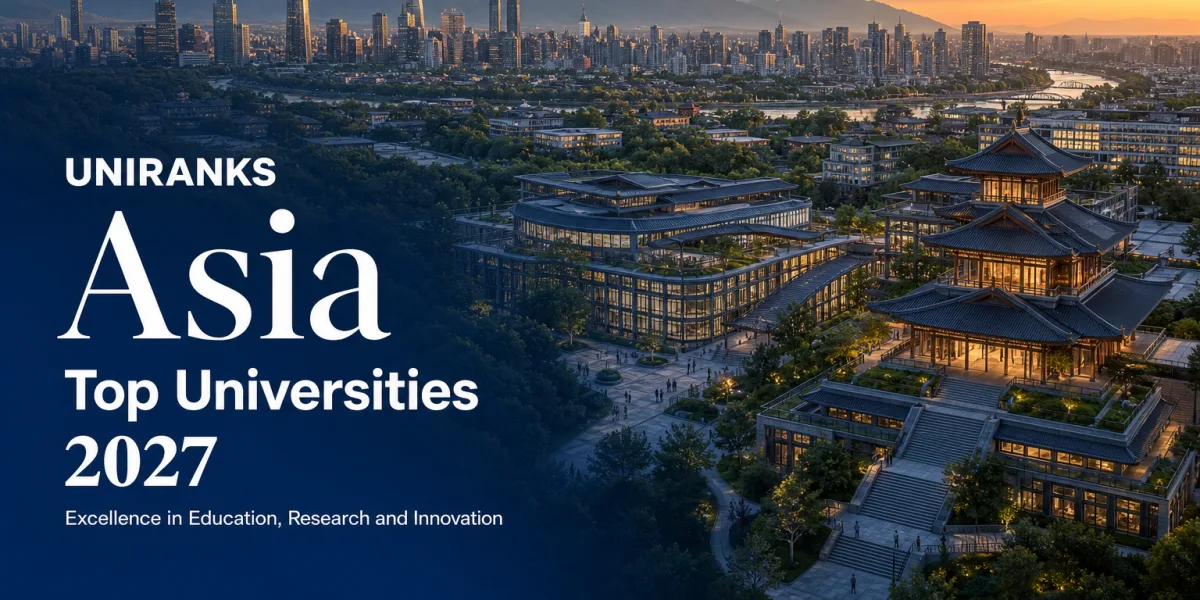
The 2027 UNIRANKS university rankings in Asia reveal a dynamic landscape of higher education with strong presence from China, Hong Kong, Singapore, and South Korea. Asia’s top 10 universities represent a mix of established research powerhouses and innovation leaders, showcasing the region’s growing influence in global academia. This article examines these leading institutions, recent regional higher-education developments, and important trends shaping student opportunities in Asia today.

Key Takeaways
- The National University of Singapore holds the highest UNIRANKS position in Asia in 2027, reflecting regional academic diversity.
- China contributes half of Asia’s top 10 universities, emphasizing its expansive higher education system.
- Hong Kong maintains a significant cluster of leading universities featuring three of the Asian top five positions.
- Top universities encompass both public and private sectors, demonstrating varied governance models across Asia.
- Regional initiatives focus on enhancing student mobility, digital transformation, and research collaborations to strengthen university offerings.
- Students should consider factors beyond rankings, including international mobility and sustainability initiatives, when choosing universities.
Introduction
Asia is home to a diverse and rapidly evolving higher education environment. The 2027 UNIRANKS university rankings for the region highlight the emergence of world-class institutions with growing impact on research, innovation, and education quality. National universities in Singapore, China, Hong Kong, and South Korea dominate the top positions, representing a broad spread across East Asia and Southeast Asia. This ranking snapshot offers insights not only into institutional excellence but also into regional collaboration initiatives and higher education policies aimed at enhancing accessibility, sustainability, and global engagement. Understanding this context helps students and families make more informed decisions about pursuing university study in Asia, where economic growth and educational reform continue to intersect.
Top Universities in Asia for 2027
| Rank | University | Country | World Rank | Overall Score |
|---|---|---|---|---|
| 1 |
 Singapore
|
12 | 96.7 | |
| 2 |
 China
China
|
45 | 95.3 | |
| 3 |
 Hong Kong
|
47 | 95.3 | |
| 4 |
Hong Kong
|
53 | 95.1 | |
| 5 |
Hong Kong
|
54 | 95.1 | |
| 6 |
China
|
57 | 95.0 | |
| 7 |
China
|
59 | 95.0 | |
| 8 |
China
|
67 | 94.7 | |
| 9 |
China
|
69 | 94.7 | |
| 10 |
 South Korea
|
75 | 94.6 |







Key Trends
Asian universities are expanding research output and innovation capacity rapidly.
Cross-border academic exchanges and partnerships are deepening in the region.
Programs increasingly align with workforce needs to enhance career outcomes.
Higher education institutions adopt advanced digital tools and online learning platforms.
Geographic and Institutional Concentration Among Asia’s Top Universities
The 2027 UNIRANKS snapshot for Asia reveals a concentrated presence of top-ranked universities primarily in China, Hong Kong, Singapore, and South Korea. China contributes five of the top ten institutions, including Tsinghua University, University of Science & Technology of China, Shanghai Jiao Tong University, Zhejiang University, and Peking University. Hong Kong stands out with three universities occupying consecutive rankings from 3rd to 5th place, namely Hong Kong Polytechnic University, University of Hong Kong, and Chinese University of Hong Kong. Singapore’s National University of Singapore holds the highest regional position at 1st with a world rank of 12. South Korea’s Seoul National University appears at 10th, illustrating the competitive presence across multiple East Asian education hubs. This distribution indicates not only the scale of higher-education investments across these countries but also the varying models of governance and institutional focus. Public research universities dominate the top ranks, underpinned by substantial governmental and private sector support. The geographic clustering alongside diverse university governance types offers prospective students a range of educational environments and academic cultures to consider when selecting institutions within Asia.
Regional Policies and Collaboration Driving Higher Education Development
Higher education across Asia is shaped by multi-national policy frameworks and collaborations which aim to boost academic mobility, research partnerships, and innovation ecosystems. In Southeast Asia, the 2026 ASEAN initiatives propose enhanced teacher development, digital transformation, and academic exchanges catalyzing a more inclusive higher education space. East Asia’s CAMPUS Asia program fosters student and faculty mobility among China, Japan, and South Korea, emphasizing regional integration of curricula and credit transfer schemes. The Greater Bay Area development in China underlines significant support for innovation-driven growth and university-industry synergy in key sectors. Collectively, these policy efforts encourage internationalization, quality assurance, and sustainable development aligned with broader socio-economic goals. For students, these developments signal expanding opportunities for cross-border study options, joint degrees, and collaborations with global academic networks, making Asia an increasingly interconnected and attractive higher education environment.
Emerging Priorities: Digital Advancement, Employability, and Sustainability
Contemporary higher education in Asia is prioritizing digital transformation alongside sustainability commitments and employability enhancement. Universities are increasingly integrating online learning platforms, digital resources, and virtual collaboration tools to support hybrid and remote education models. The ASEAN roadmap features a common credit-transfer system and unified qualifications frameworks which facilitate intra-regional student mobility while reducing barriers. Graduate employability receives focus through curriculum designs incorporating industry relevance, internships, and skills development, assisting students in transitioning successfully into their chosen careers. Sustainability efforts are aligned with the United Nations Sustainable Development Goals, reflected in campus operations and academic programs promoting environmental awareness and social responsibility. These priorities influence not only institutional strategies but also student experiences, emphasizing holistic development. Consequently, students evaluating universities in Asia should consider how prospective institutions support digital readiness, career pathways, and sustainable practices, as these factors increasingly define contemporary academic value and future readiness.
Methodology
The university positions, scores and country-ranking data shown in this article come directly from the UNIRANKS 2027 ranking datasets and are not recalculated or modified by the article-generation process.
Contextual research may be used to explain higher-education developments, policy, research, internationalization and student-related trends. This contextual research does not determine or alter any UNIRANKS ranking position or score.
Country rankings and university world rankings are separate UNIRANKS datasets. Country rankings assess the overall strength and international standing of national higher-education systems, while university rankings evaluate individual institutions.
Frequently Asked Questions
What does the 2027 UNIRANKS ranking represent for Asian universities?
Which country has the most universities in Asia’s top 10 in 2027?
How do regional policies affect higher education in Asia?
Is international student mobility significant in Asia?
What role does research and innovation play in these rankings?
How important is digital transformation in Asian universities?
Are employability and career readiness considered in Asian university development?
What should students consider beyond university rankings?
How are sustainability and SDG initiatives integrated in Asian higher education?
Does the ranking differentiate between public and private universities?
Conclusion
The 2027 UNIRANKS university rankings highlight Asia’s complex and competitive higher education landscape, with strong representation from China, Hong Kong, Singapore, and South Korea among the top institutions. These universities operate amid vibrant regional initiatives focusing on accessibility, innovation, internationalization, and sustainability. For prospective students, understanding this broader context clarifies how university options in Asia are influenced by evolving policies, technological advancements, and market demands. While rankings offer useful comparative data, other factors such as student mobility possibilities, digital readiness, and career alignment deserve equal consideration. Asia’s higher education system continues to grow in global stature, presenting diverse opportunities that require thoughtful evaluation tailored to individual student aspirations and needs.
 German
 English
 Spanish
 French
 Portuguese
 Turkish
 Russian
 Arabic
 Hindi
Hindi Chinese
 Korean
Comments (0)
Join the discussion
Comments must be relevant to this article and cannot contain links.
Unrelated comments or comments containing links will not be published.