




University Rankings in Nepal for 2027: Top Universities, Trends and Insights
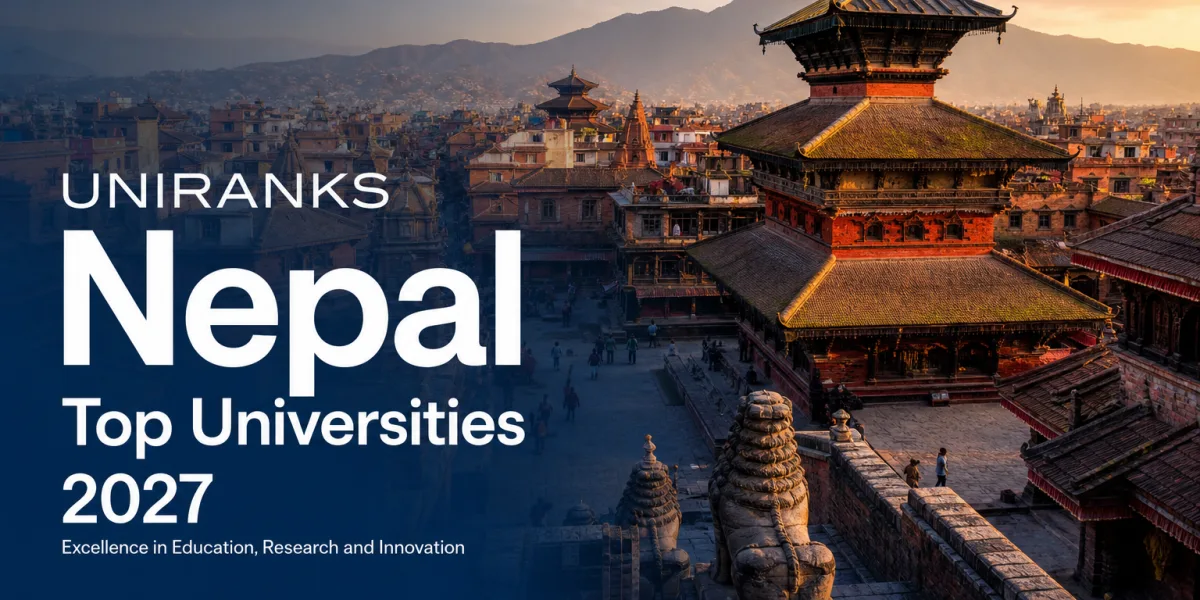
Kathmandu University ranks #1 in Nepal in the UNIRANKS 2027 University Rankings, followed by P Koirala Institute of Health Sciences at #2 and Pokhara University at #3. This article covers Nepal's leading universities, key higher-education trends, recent reforms, and insightful analysis of the university landscape. It aims to assist students and stakeholders in understanding the evolving academic environment and opportunities within Nepal's higher education sector in 2027.

Key Takeaways
- Kathmandu University leads Nepal’s 2027 university rankings with a total score of 64.8 and a world rank of 2520, indicating its prominent position in the national academic landscape.
- Only eight universities from Nepal are ranked in the UNIRANKS 2027 data, reflecting a relatively small number of globally recognized institutions.
- Nepal holds a global rank of 118 in the UNIRANKS 2027 Country Rankings, placing it at 41st position within the Asia region with a country score of 31.7 out of 100.
- The strongest dimension in Nepal’s country ranking is Leading University Strength, scoring 52.1, surpassing its Higher Education Depth score of 31.1 and no recorded global or elite excellence presence.
- The top-ranked universities include specialized institutions in health sciences and agriculture, revealing a diverse academic emphasis beyond traditional disciplines.
- Recent policy initiatives standardize the academic calendar and tighten regulations for foreign-affiliated colleges, aiming to improve quality and transparency in Nepal’s higher education.
Nepal Higher Education Rankings 2027 at a Glance
In the UNIRANKS 2027 Country Rankings, Nepal is positioned 118th globally and ranks 41st in Asia. With a country score of 31.7, Nepal’s Leading University Strength is its highest scoring dimension at 52.1, followed by a Higher Education Depth score of 31.1. The rankings indicate no measurable presence in Global Excellence and Elite Excellence categories.
Introduction
Nepal's higher education sector is characterized by a mix of public and private institutions, including specialized universities focusing on health sciences, agriculture, and Buddhist studies. The country continues to develop its higher education infrastructure and policies to enhance academic quality, research opportunities, and international collaboration. The UNIRANKS 2027 university rankings present an evidence-based view of Nepal's leading universities, providing crucial insights for prospective students, educators, and policymakers. This article explores the positions of Nepalese universities in the global context, highlights important national higher-education reforms, and discusses evolving trends that influence academic offerings and student experiences in Nepal.
Top Universities in Nepal for 2027
| Rank | University | Country | World Rank | Overall Score |
|---|---|---|---|---|
| 1 |
 Nepal
Nepal
|
2520 | 64.8 | |
| 2 |
Nepal
|
5252 | 46.6 | |
| 3 |
Nepal
|
5624 | 44.9 | |
| 4 |
Nepal
|
7452 | 36.5 | |
| 5 |
Nepal
|
7590 | 35.8 | |
| 6 |
Nepal
|
10465 | 21.4 | |
| 7 |
Nepal
|
11886 | 15.7 | |
| 8 |
Nepal
|
13412 | 6.1 |

Nepal 2027 Ranking Insights
Kathmandu University is Nepal’s highest-ranked university in the UNIRANKS 2027 rankings at World #2520.
Nepal Among All 187 Countries (Country Score Distribution)
Each dot represents a country. Higher on the chart = higher country score.
Nepal
Nepal Compared to Other Countries
Global Ranking
 Grenada
 Mongolia
 Brunei
 Cambodia
 Fiji
Fiji
 Trinidad and Tobago
Nepal
Trinidad and Tobago
Nepal
 Senegal
 United States Virgin Islands
 Guam
Guam
 Montenegro
 Mozambique
 Botswana
Key Trends
Kathmandu University promotes innovation with dedicated research centers and policy support.
Significant budget allocation targets skill development and education sector reforms.
Partnerships with global institutions and MoUs aim to enhance international engagement.
AI integration and digital policy dialogues mark Nepal's higher education modernization.
Which universities lead Nepal's 2027 university rankings and what patterns emerge?
The UNIRANKS 2027 data lists eight ranked universities in Nepal, with Kathmandu University occupying the top position with a total score of 64.8 and a world rank of 2520. Following it, the P Koirala Institute of Health Sciences and Pokhara University hold the 2nd and 3rd positions respectively. These institutions demonstrate a focus on specialized fields like health sciences and technology, reflecting academic diversity. The rankings also show a steep score gradient; the lowest-ranked institution, Tribhuvan University, scores 6.1, suggesting disparities in international visibility or performance metrics. Geographically, the higher-ranked universities tend to be located near urban centers, facilitating access to resources. This concentration aligns with national trends where university development clusters around Kathmandu and major cities. The mix of public, private, and specialized universities indicates a multifaceted higher education system in Nepal.
What higher-education reforms and policy initiatives influence Nepal’s academic landscape in 2027?
Nepal's higher education sector recently underwent key reforms aimed at improving governance, academic consistency, and transparency. The 2026 introduction of a National Academic Calendar by the University Grants Commission is a milestone standardizing academic schedules across universities. This unification is intended to streamline student progression and administrative processes. Additionally, government budget allocations for 2026–27 emphasize innovation and skills development with Rs218.30 billion dedicated to education. A notable policy change involves tightening regulatory oversight on foreign-affiliated colleges, mandating land ownership in Nepal and partnerships only with universities that are globally ranked. These measures reflect efforts to safeguard students and enhance institutional accountability. Furthermore, cross-sector innovations are fostered at Kathmandu University via dedicated research and innovation directorates and technology innovation centers, demonstrating an institutional commitment to research capacity building. International collaborations, notably the MoU between Glocal and Times Higher Education, aim to boost Nepal's global academic integration through quality improvement and visibility enhancements.
How do Nepalese universities perform in international contexts and what regional positioning does the country hold in 2027?
According to UNIRANKS 2027 data, Nepal holds a global rank of 118 out of 187 countries and secures the 41st position within Asia, with an overall country score of 31.7. Nepal’s highest ranked university, Kathmandu University, stands at world rank 2520, demonstrating a presence on the global map but outside major top 1000 tiers. The country's Leading University Strength score of 52.1 surpasses other dimensions, reflecting relative institutional robustness among selected universities. However, Nepal lacks entries in the Global Excellence and Elite Excellence assessment categories, indicating limited representation among the elite global academic institutions. The Asian regional rank suggests competitive challenges against neighboring countries with more developed university sectors. Despite this, ongoing governmental reforms and institutional innovations seek to bridge quality gaps and enhance Nepal's regional competitiveness. The comparatively small number of ranked universities (eight) points to opportunities for growth in international research collaboration, institutional visibility, and academic diversification.
Methodology
The university positions, scores and country-ranking data shown in this article come directly from the UNIRANKS 2027 ranking datasets and are not recalculated or modified by the article-generation process.
Contextual research may be used to explain higher-education developments, policy, research, internationalization and student-related trends. This contextual research does not determine or alter any UNIRANKS ranking position or score.
Country rankings and university world rankings are separate UNIRANKS datasets. Country rankings assess the overall strength and international standing of national higher-education systems, while university rankings evaluate individual institutions.
Sources & References
Sources used to verify ranking data and contextual information presented in this article.
Primary UNIRANKS Sources
- UNIRANKS 2027 University Rankings
- UNIRANKS 2027 Country Rankings
- UNIRANKS 2027 Ranking Methodology
- UNIRANKS institutional and ranking datasets used for this article
External Contextual Sources
- Nepal implements national academic calendar to standardize university education - Fiscal Nepal
- Budget allocates Rs218.30 billion to education sector, prioritises skills and innovation
- Government Tightens Rules for Foreign Degree Colleges, Sets Land and Global Ranking Requirements - Fiscal Nepal
- KU RDI – Research, Development and Innovation
- NTIC - Nepal Technology Innovation Center | Kathmandu University
- Glocal, THE sign MoU to boost Nepali higher education - B360 :: Business 360°
- 2026 Leadership Policy Dialogue in South Asia: Advance AI-Empowered Higher Education Transformation-UNESCO-ICHEI
Frequently Asked Questions
Which university ranks first in Nepal in the UNIRANKS 2027 University Rankings?
How many Nepalese universities are ranked in UNIRANKS 2027?
What is Nepal’s global rank in the UNIRANKS 2027 Country Rankings?
Which dimension scores highest in Nepal’s country ranking?
Does Nepal have universities in the top 1000 globally according to UNIRANKS 2027?
What recent reforms affect Nepal’s higher education system?
Are there efforts to internationalize Nepalese universities?
What role does Kathmandu University play in research and innovation?
How does the government support higher education in Nepal?
How does UNIRANKS evaluate universities for rankings?
Conclusion
The UNIRANKS 2027 University Rankings position Kathmandu University as Nepal’s leading institution, with several other universities contributing to the country’s academic diversity across specialized fields. Nepal holds a moderate global rank of 118 and regional placement of 41 in Asia, with strengths in leading university capacity but limited global elite presence. Recent government reforms, including the National Academic Calendar and enhanced regulatory frameworks, alongside institutional initiatives in research, innovation, and international collaboration, indicate a dynamic and evolving higher education sector. These developments provide valuable context for students and stakeholders evaluating academic opportunities in Nepal during 2027, complementing ranking data with insights into sectoral growth and challenges.
 German
 English
 Spanish
 French
 Portuguese
 Turkish
 Russian
 Arabic
 Hindi
Hindi Chinese
 Korean
Comments (0)
Join the discussion
Comments must be relevant to this article and cannot contain links.
Unrelated comments or comments containing links will not be published.