


University Rankings in Russia for 2027: Top Universities, Trends and Insights
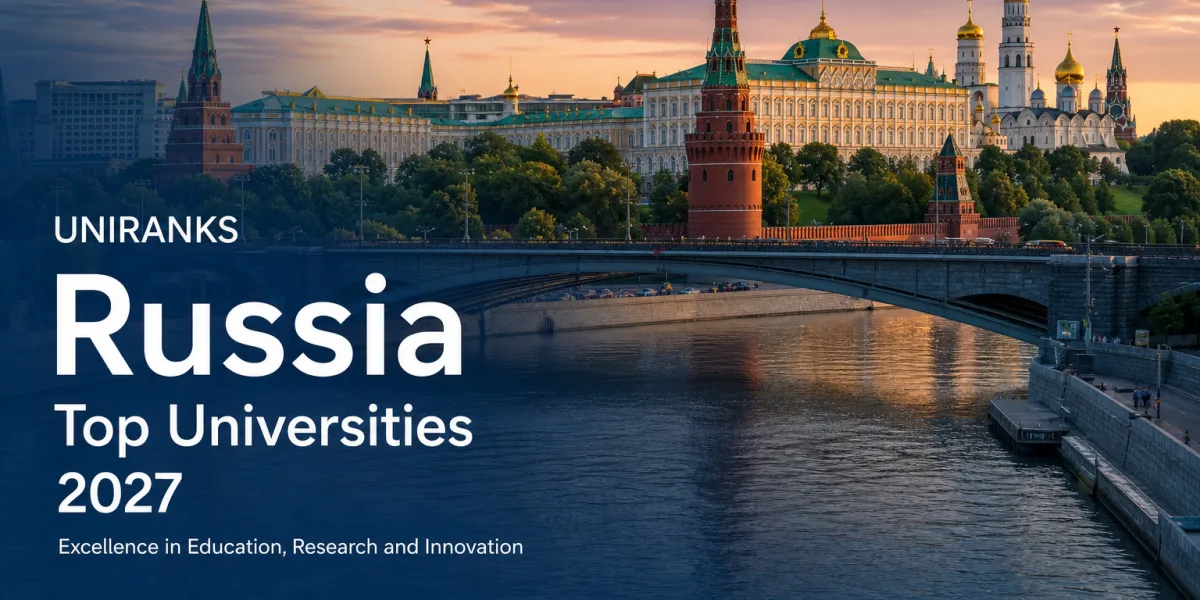
Lomonosov Moscow State University ranks #1 in Russia in the UNIRANKS 2027 University Rankings, followed by Novosibirsk State University at #2 and National Nuclear Research University at #3. This article presents an in-depth look at the top universities in Russia for 2027, along with emerging trends and key insights. It offers useful context for students, educators, and policymakers interested in the evolving landscape of Russian higher education, including university rankings in Russia 2027.

Key Takeaways
- Russia's top three universities each achieve world ranks within the top 350, demonstrating strong international presence among its leading institutions.
- The country's score of 75.7 in the UNIRANKS 2027 Country Rankings positions Russia as 16th globally, reflecting a solid overall higher education landscape.
- Russia holds the highest regional rank in the Eastern Europe and Central Asia (EECA) region, indicating its prominence in this geographical area.
- With eight universities ranked in the global top 500, Russia's higher education system shows notable depth among its leading schools.
- The leading university strength dimension scores highest at 90.8, suggesting particular excellence in top-tier universities across Russia.
Russia Higher Education Rankings 2027 at a Glance
In the UNIRANKS 2027 Country Rankings, Russia is ranked 16th globally with a country score of 75.7. Regionally, it holds the top position in Eastern Europe and Central Asia (EECA), ranks 6th in Asia, and 7th in Europe. Russia's strongest assessment score is in Leading University Strength at 90.8, followed by Higher Education Depth at 89.1, with Global Excellence Presence at 56.0 and Elite Excellence Presence at 0.
Introduction
Russia's higher education system is a significant player on the global stage, with a diverse array of universities offering robust research and educational opportunities. The UNIRANKS 2027 University Rankings provide an authoritative overview of the country's top higher education institutions, highlighting their international standing and performance across various assessment areas. This article aims to provide clarity on Russia's university rankings for 2027, identifying leading institutions while discussing broader higher education trends shaping the sector. The insights offered here are designed to inform prospective students, educational professionals, and policymakers about the competitive landscape within Russia's universities and the factors influencing their current positions.
Top Universities in Russia for 2027
| Rank | University | Country | World Rank | Overall Score |
|---|---|---|---|---|
| 1 |
 Russia
|
159 | 92.2 | |
| 2 |
Russia
|
300 | 90.1 | |
| 3 |
Russia
|
305 | 90.1 | |
| 4 |
Russia
|
343 | 89.7 | |
| 5 |
Russia
|
350 | 89.6 | |
| 6 |
Russia
|
397 | 89.1 | |
| 7 |
Russia
|
463 | 88.4 | |
| 8 |
Russia
|
474 | 88.2 | |
| 9 |
Russia
|
543 | 87.2 | |
| 10 |
Russia
|
588 | 86.5 |





Russia 2027 Ranking Insights
Lomonosov Moscow State University is Russia’s highest-ranked university in the UNIRANKS 2027 rankings at World #159.
Russia Among All 187 Countries (Country Score Distribution)
Each dot represents a country. Higher on the chart = higher country score.
Russia
Russia Compared to Other Countries
Global Ranking
 Brazil
 Sweden
 Switzerland
 Japan
Japan
 India
India
 Taiwan
Russia
Taiwan
Russia
 Belgium
 Germany
 Finland
 Austria
 Iran
Iran
 Turkey
Key Trends
Russian universities actively develop advanced research projects and technology innovations for 2027.
Russia enhances collaborations and joint ventures with global academic institutions and partners.
Universities emphasize preparing students for successful careers in competitive job markets.
Higher education institutions adopt new digital tools to improve learning and research infrastructure.
Which universities lead Russia’s 2027 university rankings and how are they positioned globally?
Russia’s 2027 university rankings are led by Lomonosov Moscow State University, which holds the national top spot and ranks 159th worldwide in the UNIRANKS 2027 University Rankings. Following closely are Novosibirsk State University at 300th globally and National Nuclear Research University at 305th globally. These three institutions represent the strongest Russian presence in world higher education rankings, all positioning within the top 350 universities worldwide. The top ten Russian universities featured in the ranking show a clustering between world ranks 159 and 588. Notably, one university is in the top 250 globally, with eight universities ranked within the top 500. This profile indicates significant international visibility and recognition at the upper echelons of university performance, though only Lomonosov Moscow State University achieves the top 200 range. The rankings reflect a distribution where top-tier universities demonstrate strengths in key assessment areas without all landing in the global elite top 100. Globally, Russian universities appear competitive and well-represented, with consistency in performance among leading institutions.
How does Russia’s regional ranking reflect its standing among nearby higher education systems in 2027?
Russia holds the highest rank in the Eastern Europe and Central Asia (EECA) region according to the UNIRANKS 2027 Country Rankings, securing first place over all other countries in this area. It also ranks 6th in Asia and 7th in Europe, underscoring its multi-regional presence and impact. This regional leadership in EECA marks Russia as a predominant hub for higher education and research within its geographic sphere. The country’s scoring metrics show particular strength in Leading University Strength (90.8) and Higher Education Depth (89.1), suggesting a broad and robust base of higher education institutions contributing to its regional prominence. While Russia does not rank in the highest elite excellence bracket, its comprehensive profile reflects substantial depth and reach across universities and disciplines. Such standings position Russia as a key player in regional education trends and a strategic partner for collaborations across multiple contiguous regions. These rankings offer perspective on Russia's ability to maintain competitive standards among neighboring systems in a 2027 academic context.
What higher education developments and trends are influencing university priorities in Russia for 2027?
As of 2026, Russia has embarked on notable higher education reforms and innovations impacting the university landscape heading into 2027. The pilot project reform extends to 2030 aiming to move beyond the Bologna system, introducing a new structure for basic, specialized, and professional higher education tiers. These reforms started implementation with broader participation as of September 2026. Admission procedures were adjusted to streamline and modernize access, including elimination of online application submissions. Universities such as Herzen State Pedagogical University and ITMO University are advancing research and innovation projects, from accelerating memory device materials to developing spectrophotometer technology. HSE University prepares to add a second supercomputer with emphasis on artificial intelligence workloads, complementing existing infrastructures. International research collaboration is strengthened by joint laboratory initiatives like the Skoltech–University of Sharjah Advanced Energy Technologies Lab focused on energy solutions for extreme climates. These trends emphasize research and innovation, digital transformation, and deepening international links. The priorities for universities in 2027 thus center on advancing technological capacity, enhancing graduate employability, and expanding research collaborations aligned with national reforms and global competitiveness.
Methodology
The university positions, scores and country-ranking data shown in this article come directly from the UNIRANKS 2027 ranking datasets and are not recalculated or modified by the article-generation process.
Contextual research may be used to explain higher-education developments, policy, research, internationalization and student-related trends. This contextual research does not determine or alter any UNIRANKS ranking position or score.
Country rankings and university world rankings are separate UNIRANKS datasets. Country rankings assess the overall strength and international standing of national higher-education systems, while university rankings evaluate individual institutions.
Sources & References
Sources used to verify ranking data and contextual information presented in this article.
Primary UNIRANKS Sources
- UNIRANKS 2027 University Rankings
- UNIRANKS 2027 Country Rankings
- UNIRANKS 2027 Ranking Methodology
- UNIRANKS institutional and ranking datasets used for this article
External Contextual Sources
- Президент РФ продлил пилотный проект по реформе высшего образования до 2030 года | Новости: ГАРАНТ.РУ
- В России изменили порядок приема в высшие учебные заведения в 2026 году | Новости: ГАРАНТ.РУ
- The Secret of Supermemory: Creation of New Generation Russian Chips Brought Closer at Herzen State Pedagogical University
- ITMO To Receive 180 Million Rubles for High-Tech Optical Equipment
- HSE University to Launch New AI Supercomputer — HSE University
- SPIEF 2026: ITMO Highpark will become a platform for the development of synchrotron research and innovation | Инвестиционный портал Санкт-Петербурга
- Skoltech and University of Sharjah launch Advanced Energy Technologies Joint Laboratory (AETLab) | Сколтех
Frequently Asked Questions
Which university ranks first in Russia according to the UNIRANKS 2027 University Rankings?
How many Russian universities are ranked within the global top 500 in 2027?
What is Russia’s global position in the UNIRANKS 2027 Country Rankings?
What regional ranks does Russia hold in 2027?
What are the strongest assessment scores for Russia in 2027?
Are there any notable reforms affecting Russian higher education in 2027?
How does UNIRANKS evaluate universities in its rankings?
Do international collaborations affect Russia’s university rankings?
How many Russian universities are listed in the UNIRANKS 2027 data?
What can prospective students learn from the Russia university rankings for 2027?
Conclusion
Russia's higher education landscape is characterized by a strong presence in global university rankings and leadership within its regional sphere according to the UNIRANKS 2027 Country Rankings. The nation’s ten representative universities range from within the world’s top 160 to top 600, reflecting notable depth and breadth. Simultaneously, ongoing reforms and strategic initiatives in research, digital transformation, and international partnership signal a forward-looking approach to university development. These factors combine to offer prospective students and stakeholders rich insights into where Russian institutions stand in 2027 and what trajectories the sector may follow. This comprehensive ranking and trend analysis serves as an essential resource for those engaging with Russian higher education systems now and into the future.
 German
 English
 Spanish
 French
 Portuguese
 Turkish
 Russian
 Arabic
 Hindi
Hindi Chinese
 Korean
Comments (0)
Join the discussion
Comments must be relevant to this article and cannot contain links.
Unrelated comments or comments containing links will not be published.