



University Rankings in Afghanistan for 2027: Top Universities, Trends and Insights
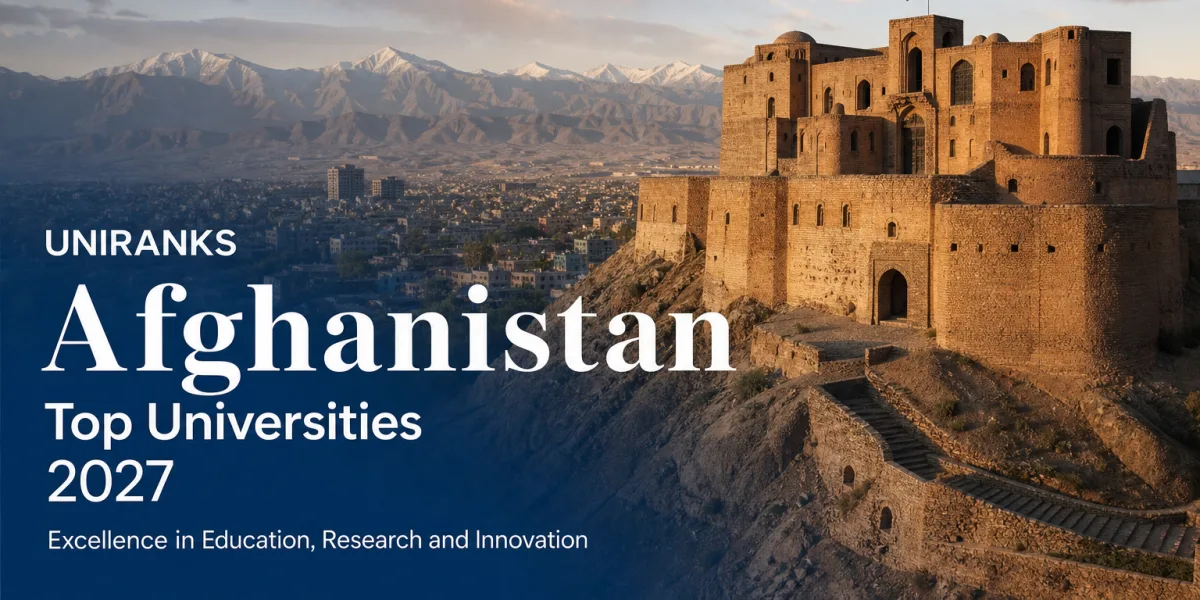
American University of Afghanistan ranks #1 in Afghanistan in the UNIRANKS 2027 University Rankings, followed by Kabul University at #2 and Polytechnical University of Kabul at #3. This article explores these rankings alongside key trends impacting Afghan higher education, including challenges faced by universities and emerging efforts supporting education. Students and researchers will find valuable insights into the country's leading institutions and broader educational developments.

Key Takeaways
- Afghanistan's American University of Afghanistan holds the highest total score among its peers with 46.54, indicating its leading position in the national rankings for 2027.
- The country's university rankings show a range of scores, with a nearly 25-point spread between the top-ranked university and the 10th-ranked, Salam University, reflecting diversity in institutional performance.
- Afghanistan occupies the 120th position globally in the UNIRANKS 2027 Country Rankings, with a total country score of 26.8, positioned 41st within the Asia region.
- No Afghan universities are listed within the world's top 1000 universities in 2027, highlighting the developmental stage of the nation's higher education sector in a global context.
- The top universities are concentrated mainly in the capital, Kabul, with half of the top 10 campuses located there, showing geographical centralization in Afghan higher education.
Afghanistan Higher Education Rankings 2027 at a Glance
According to the UNIRANKS 2027 Country Rankings, Afghanistan is ranked 120th globally with a total country score of 26.8. In the Asia region, it holds the 41st position. Among the assessment dimensions, Afghanistan's strongest performance is in Leading University Strength with a score of 43.0, followed by Higher Education Depth at 32.0. The country has no scores in Global Excellence or Elite Excellence Presence for 2027, indicating areas for future development.
Introduction
Afghanistan's higher education system in 2027 faces complex challenges and opportunities. This article provides an overview of the most prominent universities based on the UNIRANKS 2027 University Rankings, focusing particularly on the top 10 institutions within the country. Beyond the rankings themselves, we examine recent higher-education trends, including ongoing restrictions affecting access, initiatives to expand learning opportunities, and institutional conditions impacting academic life. This analysis aims to inform prospective students, educators, and policymakers interested in understanding Afghanistan's evolving academic landscape and the context behind the rankings.
Top Universities in Afghanistan for 2027
| Rank | University | Country | World Rank | Overall Score |
|---|---|---|---|---|
| 1 |
 Afghanistan
|
5273 | 46.5 | |
| 2 |
Afghanistan
|
5394 | 46.0 | |
| 3 |
Afghanistan
|
7498 | 36.3 | |
| 4 |
Afghanistan
|
7614 | 35.7 | |
| 5 |
Afghanistan
|
7742 | 34.6 | |
| 6 |
Afghanistan
|
9044 | 28.7 | |
| 7 |
Afghanistan
|
10020 | 24.0 | |
| 8 |
Afghanistan
|
10062 | 23.7 | |
| 9 |
Afghanistan
|
10174 | 22.9 | |
| 10 |
Afghanistan
|
10450 | 21.5 |
Afghanistan 2027 Ranking Insights
American University of Afghanistan is Afghanistan’s highest-ranked university in the UNIRANKS 2027 rankings at World #5273.
Afghanistan Among All 187 Countries (Country Score Distribution)
Each dot represents a country. Higher on the chart = higher country score.
Afghanistan
Afghanistan Compared to Other Countries
Global Ranking
 Senegal
 United States Virgin Islands
 Guam
Guam
 Montenegro
 Mozambique
 Botswana
Afghanistan
Botswana
Afghanistan
 Yemen
Yemen
 Mauritius
 San Marino
 Liechtenstein
 Monaco
 Papua New Guinea
Key Trends
International initiatives aim to support research capacity amidst university constraints.
Programs launched to expand education access in underserved provinces.
Academic environments impacted by political conditions and restrictions.
Education access severely limited for women and girls since 2021.
Which Afghan Universities Lead the 2027 Rankings and How Are They Geographically Distributed?
The 2027 UNIRANKS data places the American University of Afghanistan at the pinnacle of national university rankings with a total score of 46.5 and a world rank of 5273. Kabul University follows closely as the second-ranked institution with a total score of 46.0, ranked 5394 globally. The third position is held by the Polytechnical University of Kabul with a score of 36.3 and a world rank of 7498. These three universities represent a significant lead over others in the country in terms of total scores. Geographically, five of the top ten universities, including the top three, are located in Kabul, reflecting a strong concentration of higher-education resources in the capital. Other universities like Herat University and Nangarhar University represent regions outside Kabul, signifying some degree of geographical diversity. This distribution indicates that students in Afghanistan often access the highest-ranked universities predominantly in Kabul, while other provinces are represented by fewer institutions within the top 10.
What Does the UNIRANKS 2027 Country Ranking Reveal About Afghanistan’s Higher Education Sector?
Afghanistan holds the 120th position globally in the UNIRANKS 2027 Country Rankings with a total score of 26.8 and is ranked 41st in Asia. This positioning shows a developing higher-education sector with measurable strengths and challenges. The strongest indicator is Leading University Strength, where Afghanistan scores 43.0, highlighting the top institutions’ relative capacities. This is followed by Higher Education Depth at 32.0, which reflects the country’s broader academic landscape and institutional depth. However, the country reports no scores for Global Excellence Presence and Elite Excellence Presence, indicating that Afghan universities are currently absent from the highest global echelons and elite performance categories. These rankings illustrate a national higher education ecosystem that possesses notable individual universities but overall is still forging its international academic presence and reputation.
How Are Current Socio-Political Factors Influencing Afghan Higher Education and University Operations?
The higher education sector in Afghanistan is significantly affected by socio-political conditions, most notably the restrictions imposed on women and girls' access to secondary and higher education since August 2021. Over 2.6 million girls have been denied secondary education access, making Afghanistan unique globally in this respect. These policies have altered the academic environment, affecting both student demographics and university function. Universities reportedly no longer serve as fully autonomous academic spaces; academic progression has shifted from merit-based assessments to political criteria, and scholarly work is conducted under conditions of self-censorship. Despite these challenges, international organizations such as UNESCO and the Aga Khan Foundation have launched initiatives to provide alternative learning pathways and improve education access in underserved regions. These include programs aiming to strengthen teaching quality and community engagement. While these efforts provide critical support, the overall higher education landscape remains constrained by political and social realities, impacting student experience, academic freedom, and institutional growth profoundly.
Methodology
The university positions, scores and country-ranking data shown in this article come directly from the UNIRANKS 2027 ranking datasets and are not recalculated or modified by the article-generation process.
Contextual research may be used to explain higher-education developments, policy, research, internationalization and student-related trends. This contextual research does not determine or alter any UNIRANKS ranking position or score.
Country rankings and university world rankings are separate UNIRANKS datasets. Country rankings assess the overall strength and international standing of national higher-education systems, while university rankings evaluate individual institutions.
Sources & References
Sources used to verify ranking data and contextual information presented in this article.
Primary UNIRANKS Sources
- UNIRANKS 2027 University Rankings
- UNIRANKS 2027 Country Rankings
- UNIRANKS 2027 Ranking Methodology
- UNIRANKS institutional and ranking datasets used for this article
External Contextual Sources
- More than 2.6 million girls in Afghanistan have been denied a secondary education since 2021
- UNESCO and Sida strengthen alternative learning opportunities and
- AKF launches $25m programme to expand education access across 8 provinces in Afghanistan - Aga Khan Foundation
- Universities in Afghanistan ‘no longer functioning’ | Times Higher Education (THE)
- 2.4 million Afghan girls shut out of secondary school 5 years after Taliban takeover, UN says
- 'Afghan women fight and invent strategies to survive': A women's radio station and underground schools offer glimmers of hope
- Afghanistan's Taliban break out of international isolation five years after returning to power
Frequently Asked Questions
Which university ranks highest in Afghanistan according to the UNIRANKS 2027 rankings?
How many universities from Afghanistan are listed in the UNIRANKS 2027 top 10?
What is Afghanistan’s global ranking position in the UNIRANKS 2027 Country Rankings?
Are any Afghan universities ranked within the top 1000 globally in 2027?
How does the UNIRANKS methodology evaluate universities?
Which cities in Afghanistan host the top-ranked universities?
How has the political situation affected higher education in Afghanistan recently?
Are there international initiatives supporting education in Afghanistan?
What factors contribute to the diversity in university scores within Afghanistan?
Can international students study at Afghan universities ranked in UNIRANKS 2027?
Conclusion
The UNIRANKS 2027 University Rankings highlight a competitive diversity among Afghanistan’s leading universities, with the American University of Afghanistan, Kabul University, and Polytechnical University of Kabul standing out nationally. Afghanistan’s placement at 120th globally and 41st in Asia reflects a higher education sector that is developing amid considerable socio-political challenges, notably restrictions on female education and constrained academic freedoms. International programs are providing important educational support, but the overall environment remains challenging. These rankings and contextual insights offer essential information for students, educators, and policymakers examining Afghanistan’s university landscape and higher education prospects in 2027.
 German
 English
 Spanish
 French
 Portuguese
 Turkish
 Russian
 Arabic
 Hindi
Hindi Chinese
 Korean
Comments (0)
Join the discussion
Comments must be relevant to this article and cannot contain links.
Unrelated comments or comments containing links will not be published.